Wedding planning
Digital vs Paper Wedding Cards in Bangladesh: An Honest Comparison
ডিজিটাল না কাগজের কার্ড — কোনটা আপনার জন্য?
Printed cards carry respect; digital invitations carry every detail. Cost, convenience and etiquette for Bangladeshi weddings, compared.
3 min read
Every Bangladeshi family planning a wedding eventually has the same conversation: do we print cards, send a link, or both? There is no single right answer, but there is a right answer for your family. Here is an honest comparison.
What a printed card does well
A printed card is more than information. Handing a card to an elder, in person, is a gesture of respect, and many families would not consider a wedding properly announced without it. A beautiful card is also a keepsake: people keep them in drawers for years.
Printed cards also work for guests who don't use smartphones, and for the relatives you would visit in person anyway.
Where printed cards struggle
- Many ceremonies, one card. A typical wedding has a Gaye Holud, an Akd, the wedding itself and a Walima or Bou Bhat. Fitting every date, time and venue onto one card is hard, and printing a card per event adds up quickly.
- Changes are expensive. If a venue or time changes after printing, you either reprint or call everyone.
- Directions. An address on paper doesn't help a guest who has never been to the community centre. Someone always calls for directions on the day.
- Relatives abroad. For family in the Middle East, Malaysia, the UK or the US, a printed card usually becomes a photo sent over WhatsApp anyway.
- No idea who is coming. Paper can't tell you how many guests to expect, so catering becomes guesswork.
What a digital invitation does well
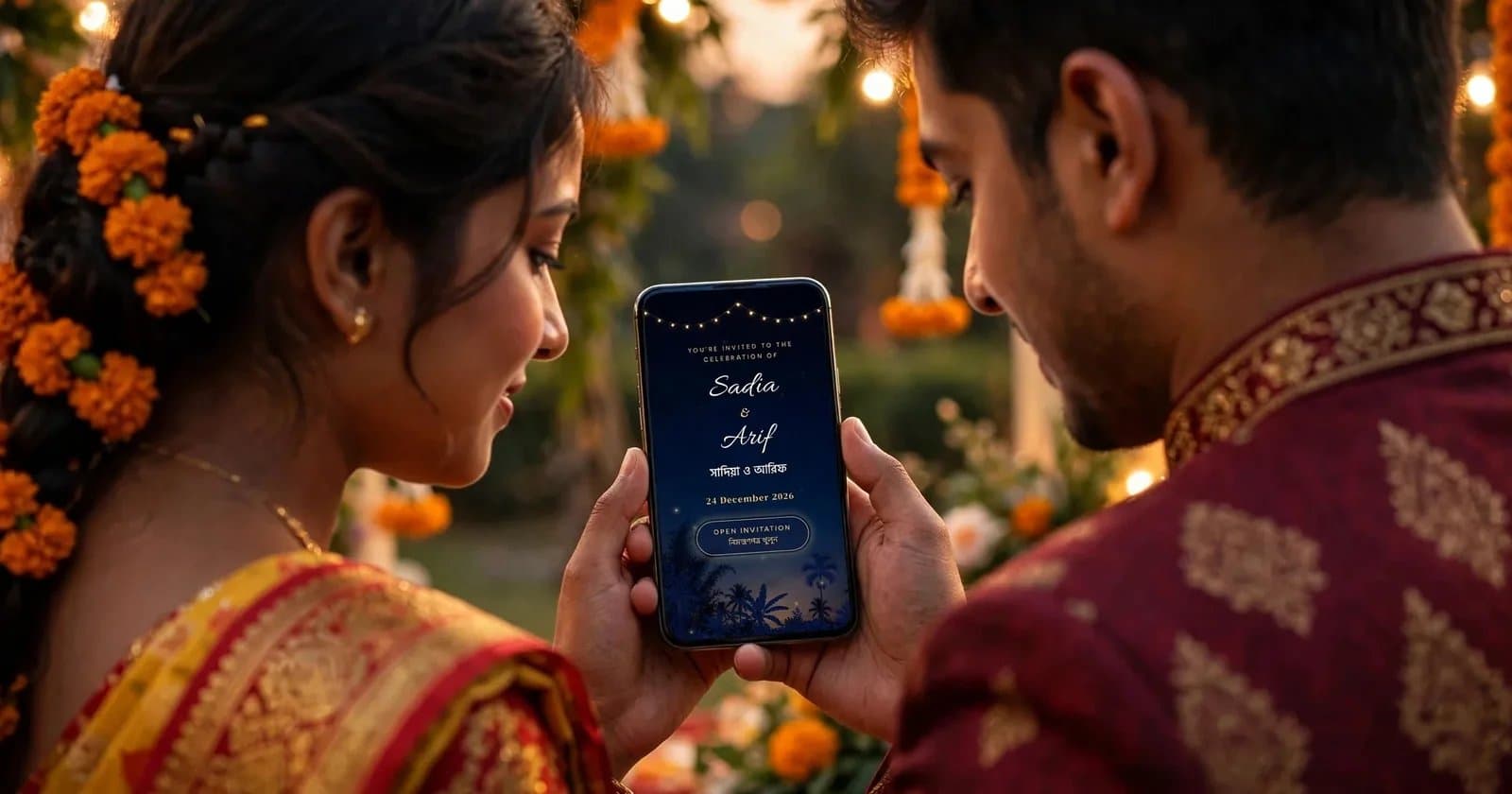
A digital invitation is a small website with its own link. It can hold everything a guest needs:
- Every ceremony with its own date, time and venue
- A Google Maps link that opens directions with one tap
- A countdown, photos and your story
- RSVP, so guests tell you if they're coming and how many seats they need
- Bangla and English side by side, for every generation of the family
It reaches everyone at the same moment, wherever they are, and if a detail changes you update it once and the same link shows the new information.
Where digital falls short
Be honest about this too. A link on WhatsApp doesn't feel as personal as a card in hand, especially to elders. Some guests will never open a link. And a digital invitation that is just a forwarded image of a printed card gets none of the benefits above.
The approach many families choose: both
The most practical answer is often a mix:
- Print a small number of cards for elders and the relatives you visit in person.
- Add a QR code to that card, so anyone can scan it to open the map, the full schedule and RSVP.
- Send the digital link to everyone else: friends, colleagues, neighbours and family abroad.
You keep the respect of the printed card, and you lose the phone calls asking "which hall was it again?"
What does it cost?
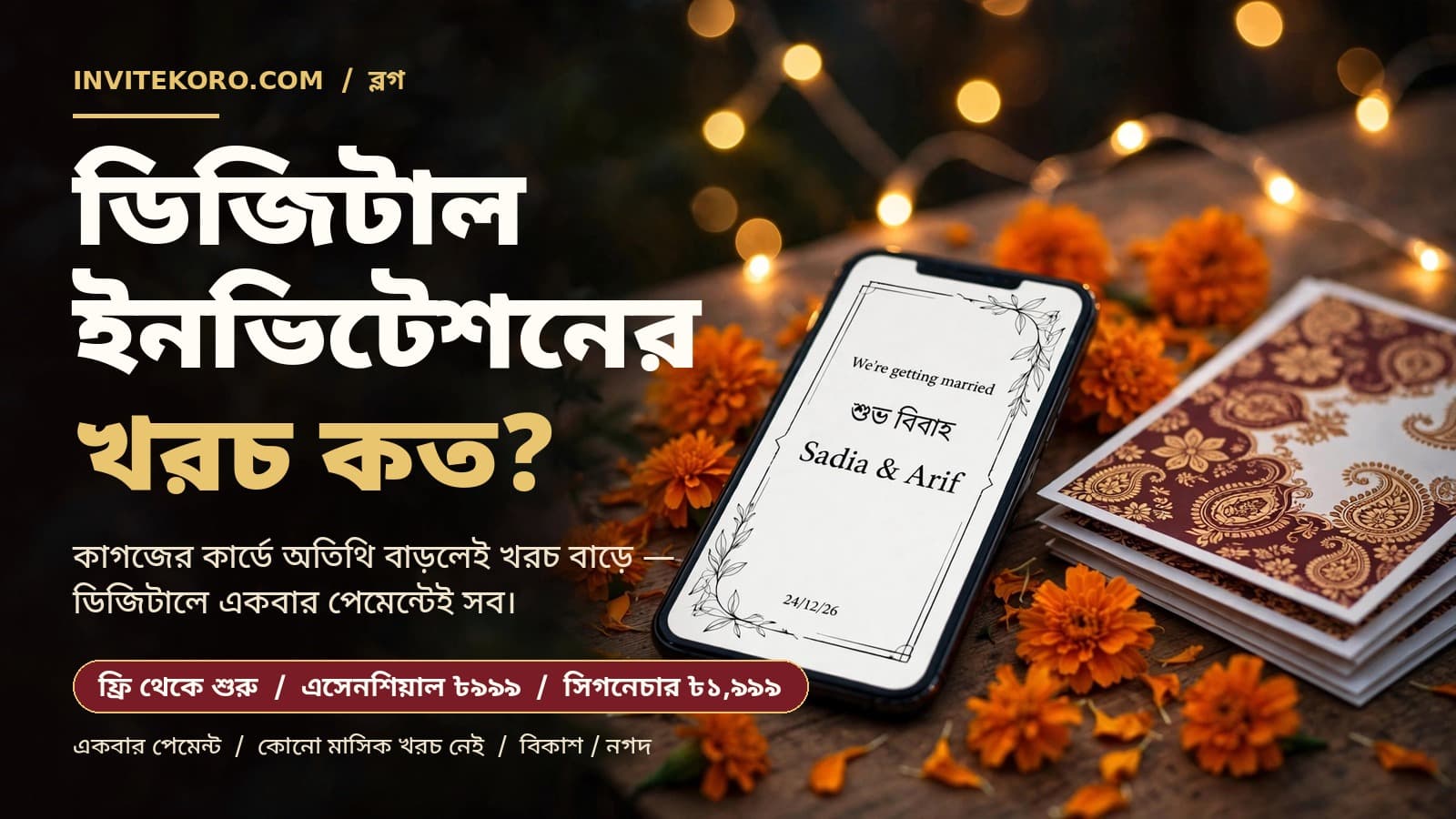
Printing costs depend on the design, paper and quantity, and they grow with every card. A digital invitation on InviteKoro is a single one-time payment, from ৳499, paid with bKash or Nagad, however many people you send it to. You can build it and preview it for free before paying.
The bottom line
Choose paper for the gestures that matter, and digital for the details that matter. If you'd like to see what guests receive, open the live demo invitation, or read how it works.